The Beauty of Haiti

As I mentioned my upcoming trip to people, they grimaced or questioned why I chose Haiti. Some smiled softly as they reminded me of the devastation, the disease, the trash and the poverty. My heart sighed as people criticized the country or warned me about all the apparent danger. All people could see was the devastation that the earthquake had left in its wake.

Haiti is definitely poor, I am not denying that, but Haiti is so much more than rubble and trash. It is the poorest country in the western hemisphere, but it has the more missionaries per sq. mile than any other country.

That statistic hit me hard.

Missionaries should help make a country better, but some of the missionaries are instigating the dependency of the people. Haiti is a country in desperate need of hope, but it is so much more. I was devastated by the vast poverty, but I was impacted by our leader who encouraged us to see the beauty in the ashes. Haiti is a beautiful country full of beautiful people. The beauty comes from their smiles and love of community.  The beauty comes from the ocean, the trees, and the sunrises. When trying to pick a moment that impacted me, I could not narrow it down.

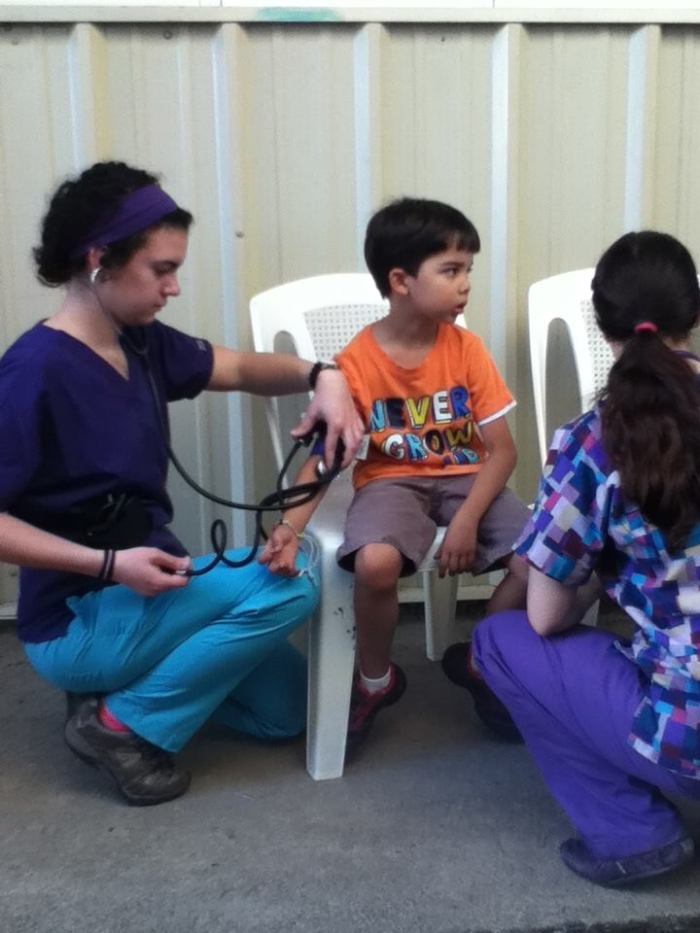
The whole trip impacted me more than I thought possible. If I had to pick one moment it would be at the General Hospital. We had planned on going to the General Hospital earlier in the week, but plans changed. We ended up visiting the pediatric ward on our last day. We brought diapers and baby wipes so that we could be allowed in. When we first got there, we went into a large room with beds and cribs lining the walls and making aisles in the room. The nurses were helping people but they were outnumbered by the number of patients. The interesting thing about the General Hospital was the price. It was free to anyone. This means that they got the poorest of the poor coming through their doors. The hospital is free, but everything else is not. The parents need to bring sheets, food, and medical supplies. If or when, the patient needs a procedure, he or his family is in charge of acquiring all of the necessary supplies for the procedure or surgery. In the pediatric ward, the parent or caretaker is in charge of the basic care as well as blood draws. The parents take on many of the tasks that would normally be delegated to an aide in America. It was distressing to see how little resources they had, but how they were creative with the resources that they had. They cut up bandages and used as little as they could on each person. A challenging moment was watching them take blood from a patient. They did not have access to all the normal tubing that we have, so they inserted and IV and held a blood collection tube at the end of the catheter to collect the blood. I cringed because the whole process appeared to cause more distress to the patient. When they had collected all that they needed, the nurse put pressure on the IV site and removed the catheter. The nurses expertly used only one glove to treat the patient and helped the parents understand what they were required to do to help their child. The nurses use betadine to clean every wound. These are only some of the aspects of differences in nursing care that caught my attention. I will never forget the feeling of helplessness I felt when I observed kids with diabetes, and dehydration, sitting in the hospital because of a lack of resources.

Another relatively intriguing aspect was the idea of community responsibility and the importance of relationships. Haitians have an amazing sense of community. In general, people watch out for each other. Parents can let their kids wander around their community knowing that their neighbors will be watching out for their kids and will discipline them if the children misbehave. The community takes care of each other. The same goes for the hospital. At the general hospital, most of the patients are crammed into two large rooms, so parents watch out for each other’s children. If one mom needs to go eat, desires a break, or wants to shower, another mom or dad will watch the child until she gets back. They simply care for each other without expectations. Even when we went to the room that had abandoned babies and children, we noticed that as the older kids ran around, parents of some of the patients had taken them under their wing. They looked out for them and were not afraid to tell them if they were misbehaving.

Their attitude about community is beautiful and so different than American life.

I could go on and on about how this experience in Haiti impacted my view of medicine, the world and my view of God. In observing the way healthcare looked in Haiti, I realized 1) I often take for granted the amount of resources that we have access to, and 2) we look just as silly to Haiti nurses with our American way of doing things, and Haitian nurses look to us. Sometimes we want to go in believing that our way of doing things is right and our view of Healthcare and Medical care is the only way. I had to realize on my second day, that while it was easy to say that I would have done things differently, it was because I came from a different culture. I was not aware of how things worked in Haitian culture. There were some areas where I could see lack of critical thinking skills and education in newer methods and technology, but the nurses were doing the best that they could with the resources and education that they had. They also taught me a thing or two about how to treat Haitian patients who bring with them their own cultural ideas and expectations which are vastly different than mine.

Saudade

Saudade is a word in Portuguese and Galician that has no direct translation in English. It describes a deep emotional state of nostalgic or profound melancholic longing for an absent something or someone that one loves. Moreover, it often carries a repressed knowledge that the object of longing may never return.

This is often how I feel about Nigeria. I long for life to go back to the way it was when I was twelve. I was young and oblivious to the dangers that surrounded me. I had friends and family in a country that felt more like home than my passport country. I do not know which is worse, longing for something you cannot have or a feeling like you are missing out on something.

As a third-culture kid, I do not feel like I have a home country, but I also feel like I missed out on something in my childhood. I understand that I am unique and privileged to have had those experiences of living in a different culture, learning about people and trying new things. I have a broader view of the world, and understand the poverty and brilliance of the world.

Life is not meant to simply to be lived, but rather experienced. i know I have some unique baggage from moving so much, and leaving friends behind, but I do not regret my life or the choices I have made. They have shaped me into who I am.

I am a NOMAD.

I am a restless spirit.

I understand airports.

I speak more than one language.

I can establish relationships quickly. I aspire to have deep relationships.

I have had a privileged life.

I converse well with people, but often cannot talk to people my age.

I adapt well and quickly to unfamiliar countries and people.

I live more in the PRESENT.

I am an excellent observer of other people.

These qualities and characteristics are only some of the things that my past has given me. I still sometimes envy people who have had a stable background and who have lived in one spot their whole life. They know who they are and where they come from. They do not have to wonder where they belong in the grand scheme of life.

Fearless Wanderings

 I am a down to earth college student in Ohio studying Nursing with a Missions and Cross cultural Minor. I love helping people and learning about the different cultures in this wide expanse of what we call the world.I have traveled since I was 3 months old. My parents were missionaries till I was 12. We then moved back to the states. I started this blog, kind of on a whim. It seemed like a good way to organize my thoughts and practice my writing skills. I don’t pretend to be a good writer. I simply want to share my stories and the stories of the people that I meet on my journey through life. 

           I am an avid reader and have always enjoyed escaping life and journeying to new places though the books I read. This may be where my sense of adventure came from. I learned that stories make up life. This is probably why I love traveling so much also. Both reading and traveling take you places you never thought you would go. They also both contain stories. Stories have always held some sort of hold on me. They hold such romance, intrigue, passion, mystery, and life. Stories are what make up culture, and  culture defines people. People are interesting and each have their own unique story. We all have stories that define who we are. These stories are happy, sad, romantic, crazy, miraculous and everything in-between. Traveling and reading opens the door for you to discover other peoples stories as well as figure out your own stories. 

 The one thing that you have that nobody else has is you. Your voice, your mind, your story, your vision. So write and draw and build and play and dance and live as only you can.

                        Neil Gaiman


This quote shows that everyone’s story is unique and awesome in its own way.  I want to share my passion for stories and people with you. My story is different that yours. My story stems from the realization that I am the incandescently beautiful daughter of the One True God. My identity is not in this world, but in the fact that I am loved. There is freedom in love. This journey of life allows me to discover what it means to be free and a daughter of the King.

“He has told you, O man, what is good; and what does the LORD require of you but to do justice, and to love kindness, and to walk humbly with your God?”

Micah 6:8