Brain Injury Awareness: What You Don’t See Still Matters

March is Brain Injury Awareness Month—and March 20th is World Head Injury Awareness Day.

Did you know that mild traumatic brain injury (mTBI) is often called a “silent epidemic”?
It’s deeply misunderstood—even within the medical field.

Here are a few things I’ve learned while living in the world of traumatic brain injury:

Brain injuries are like fingerprints—similar, but never the same.
Every brain is different, so every injury is different. Many of us experience challenges like difficulty focusing, memory issues, speech problems, balance issues, and more.
The first time I attended a TBI support group, I realized something powerful—I wasn’t alone. Hearing others share experiences that mirrored mine made me feel seen in a way I hadn’t before.

We have good days and bad days—just like everyone else, but different.
There are “good brain days” and “bad brain days.” Things like fatigue, dehydration, blood sugar changes, or overstimulation can completely shift how we function.
Some days I can do something with ease, and the next day that same task feels impossible. I’ve learned to embrace the good days and give myself grace on the hard ones—and to listen when my body tells me what it needs.

We are not our disability.
This took me a long time to understand. I used to feel like I had to explain why I was “different.”
Now I know—I have a TBI, but it does not define me. Yes, it impacts my life. But I’m also just a 20-something learning how to navigate adulthood, like everyone else.

We’re still figuring ourselves out—even years later.
I’ve met people whose injuries happened over 15 years ago—and they’re still learning who they are now. Recovery isn’t a finish line. It’s a lifelong process of rediscovery.
At some point, healing becomes less about looking back and more about moving forward—embracing both the challenges and the growth.

TBI survivors are some of the strongest people you’ll ever meet.
Because every day, they are overcoming something that was meant to break them.

#BrainInjuryAwareness #TBIAwareness #mTBI #InvisibleIllness #BrainHealth #YouAreNotAlone #ChronicIllness #MentalHealthMatters #HealingJourney #SurvivorStrong

“Nine Years Later: Living, Learning, and Parenting With a Brain Injury.”

March is Brain Injury Awareness Month 🧠

I really didn’t think I would still be struggling with things nine years later. But here we are — nine years later — and migraines still knock me for a loop.

I’m just going to be honest here… my brain injury has complicated this season of life as a student and a parent. It has made my “normal” TBI symptoms — migraines, forgetfulness, and brain fog — worse at times. Migraines like that are fewer and farther between now, but when they hit, they knock me down because I’m not expecting them anymore.

It’s in moments like this that I wish so badly to just be normal. But then I remember something important: this injury didn’t take away who I am — in many ways, it added to it. I’m the person I am today because of it.

So during Brain Injury Awareness Month, here are a few things to keep in mind when interacting with people who may have experienced known or unknown head trauma.

Every injury is different.
You may know someone who had a brain injury, but that doesn’t mean you know this person’s story. I understand the desire to relate, but sometimes the best thing you can do is simply listen. Their story might surprise you.

Thinking differently doesn’t mean we are less intelligent.
Can I be vulnerable for a moment? This is one of my biggest fears. On bad brain days, when words get stuck and my thoughts feel tangled, I worry people will think I’m incompetent. I know I shouldn’t care so much about what people think — but I’ve worked incredibly hard to get where I am. Words might get caught sometimes, but that doesn’t mean the thoughts aren’t there. If anything, I know I’m just as smart — if not smarter — than I was before my accident. And honestly, I’m doing things now that I once thought would be impossible.

“Invisible” disabilities are still disabilities.
Just because you can’t see everything someone is dealing with doesn’t mean it isn’t real. Many people with brain injuries are fighting battles you’ll never notice from the outside.

These are just a few ways we can create a little more understanding and acceptance for people living with brain injuries.

Thanks for reading my thoughts. 💛

Sitting with the Hard

They don’t tell you that even when you live together, being on opposite schedules—going to school, raising little ones, managing life—means you may not actually see much of your favorite person.

Adulting is a lot of work. Parenting is a lot of work. And sometimes you have to do the work even when you don’t feel like it.

Sean thinks so differently than I do. In many ways that’s a good thing because I’m grateful he hasn’t experienced the same trauma I have. But sometimes those differences can also be frustrating.

PTSD stinks. Truly.

You do the work. You learn how to stand on your own two feet again. You build a steady job and a healthy relationship. You think you’re finally okay… and then WHAM. PTSD hits you upside the head and knocks you down again. Suddenly everything feels hard all over.

Depression whispers lies that make you feel less than. It makes it hard to get out of bed. Hard to find motivation for even the simplest tasks.

And we’re all living in this strange post-pandemic world that changed the way we do everything.

Then there’s the guilt—feeling like you should be happy, like everything in your life looks good on paper, yet inside you’re still struggling.

It stinks.

But I haven’t been walking through it alone. I’ve been managing with the help of trusted people and a lot of faith in God. Recently, I realized I couldn’t process it all by myself anymore, so I started therapy again—with the same counselor who helped me through the darkest season before. She already knows my defense mechanisms.

Only two sessions in and it completely wrecked me.

In one session I finally put a name to something I hadn’t been able to explain: the deep sense of loss I was carrying after everything that happened. Even when life was going well, I was subconsciously preparing for it all to be ripped away again.

After that session, I had to do the hard and exhausting work of sitting with those emotions instead of running from them.

Now that I’ve sat with them, felt them fiercely, and given them space to breathe, I can begin the even harder work of changing my thoughts.

So here’s to not being okay—but being in a better place than I was yesterday.

Here’s to giving myself grace when my traumatized self hurts the people I love.

I may have broken pieces, but I’m doing the hard work of letting Jesus patch me back together in ways only He can.

Brave with Abandon

Abandon.

Not the kind that leaves you empty—but the kind that flings you forward.
This is the word I chose for my year, and somehow it already feels prophetic. We’re barely two months in, and it’s been a whirlwind of surrender, fear, faith, and boldness.

It started with panic. The clinical program I thought I had secured fell through, and suddenly everything felt uncertain. I scrambled, prayed, and questioned—until, at the very last minute, it worked out. God has a sense of humor. I think He saw me getting a little too comfortable and decided to remind me who’s actually in control. (Spoiler: it’s not me.)

Now, I’m in a clinical program that stretches me daily. It pushes me beyond hesitation, beyond comfort, beyond the safety of staying small. And in that stretching, I’m learning what it means to chase my calling with abandon.

So far, this year has already taught me a few things—lessons I didn’t ask for, but desperately needed.

First, bravery isn’t the absence of fear—it’s obedience in the middle of it.
There is so much to be afraid of, and motherhood multiplies that fear. If I could, Atlas would live in a bubble where nothing could touch him. Anxiety is my constant companion, and I work hard to keep it from shaping him. He is fearless, wild, curious—and I don’t want my fears to become his limits. Some days I succeed. Some days I fight my own heart just to let him be brave.

Second, nursing is not just a job—it is a privilege.
Yes, it’s exhausting. Yes, it’s often thankless. But it is sacred. Being invited into people’s most vulnerable moments is an honor. There are days filled with heartbreak and injustice, when bad things happen to good people. Nursing isn’t glamorous, and when you forget your “why,” burnout isn’t far behind. Remembering that this is a calling—this is a privilege—keeps my heart anchored.

And finally, balance is not optional—it is survival.
Work-life balance gets tossed around like a trendy phrase, but for me, it is the difference between being present and being depleted. Without it, I’m miserable—internally and externally. Date nights are a must, even when they’re simple. Sometimes it’s a quiet moment after a long day. Sometimes it’s takeout on the couch. The point is connection. I need time with my favorite people to be the best version of myself. I’m choosing to love them—and myself—with abandon.

We’re only at the beginning of this year, and already God is teaching me what it means to live wide open—to trust, to leap, to love without holding back.

So buckle up.
It’s going to be a wild year.

Ordinary Places, Extraordinary Grace

Ordinary.
That word makes me flinch.

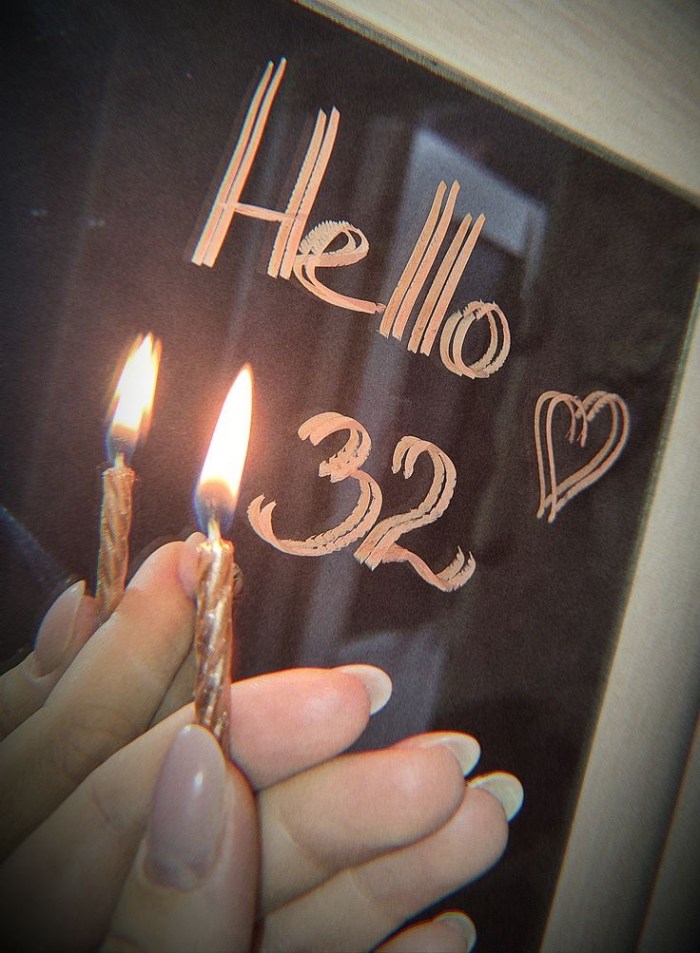
For 32 years, I’ve tried not to be ordinary—because ordinary feels too close to boring, forgettable, unimportant. And don’t lie and tell me you’ve never linked those words together in your mind.

I just finished reading Shannan Martin’s The Ministry of Ordinary Places tor the second or third time.. I originally picked it up because I love her heart and writing, but I was also curious. In my mind, ministry and ordinary don’t naturally go together.

Then I started reading.

From the introduction, she had me hooked:

“I always thought being called by God was a rare and special thing that happened to only a slim percentage of unlucky people… Whenever (‘the call’) popped up, I kindly reminded God that I’m not that kind of woman. I’m indoorsy, with a sensitive gag reflex and a mortal phobia of outhouses.”

I laughed—and sympathized—but I realized I’m the opposite. I feel the call to go. To leave. To serve overseas. But circumstances have kept me here. And honestly, I’m more comfortable on the mission field than I am in suburban America.

This tension—going versus staying—has followed me for years. Lately, I’ve felt peace about being right here, right now, in Mansfield. But Shannan Martin’s words drove the question deeper into my heart:

“God got busy shrinking the world as I knew it down to a pinhole… Rather than feeling stuck in a problem-sodden world I would never be able to fix, God was caring for my soul by pointing me toward my corner of it and asking me to believe it was enough.”

That challenged me.
Was it enough? Could it be enough?
If I stayed in America—in Mansfield, Ohio—for the rest of my life, would that be enough?

I was thinking about the weekend I was at a junior high retreat. I led a small group of sixth-grade girls. It was exhausting and life-giving all at once—middle schoolers have endless energy, and I drank an alarming amount of coffee.

But that question kept echoing in my mind:
If you stayed here forever, would it be enough?

Would listening, loving, and pointing these girls toward Jesus be enough?
It’s not as extraordinary as helping starving orphans in Mexico or serving in Africa. It doesn’t feel heroic.

Would sacrificing sleep to love a girl who doesn’t know what safe love looks like be enough?
Would a hug, a smile, a compliment be enough for a girl who never feels like she’s good enough?

I say I’m content with staying, but I wasn’t sure I believed it—until one girl wrapped her arms around me and held on like I was her lifeline. I saw the weight she was carrying, and it broke me.

Middle school is confusing and heavy and lonely. Holding her, wishing I could carry some of that weight for her, I felt something shift in me.

I started to believe this might be enough.

This “ordinary” life.
This quiet, unseen ministry.
This corner of the world.

Shannan Martin writes:

“In a world that pushes us toward bigger, better, more costly and refined, seeing the humble as radiant is an act of holy resistance.”

That line won’t leave me. Faithfulness in the small, the quiet, the overlooked—it’s holy resistance.

This is my corner of the world.
MCS. Rehab. These girls. My Bible study. Mansfield.

My heart is still scattered across Ukraine and so many places around the globe. But this—right now—this is where God has placed me.

Sitting on the sidewalk with that girl, holding her, I started to believe that this is enough.

So if you need me, you’ll find me circled around a bonfire, loving the people in my corner of the world—finally believing that ordinary is enough.

Nine Years Later: Choosing to Live With Abandon

Nine years.

It has been nine years since that awful night when life as I knew it was ripped out from under me. Nine years since everything shifted—since the trajectory of my world suddenly bent in a direction I never expected.

Nine years.
It somehow feels like forever ago and yet also like just yesterday.

Even now, I still feel the ripple effects of that night. Driving in the snow this week stirred up old fear I wish wasn’t still tucked so close to the surface. I found myself waiting for the other shoe to drop—a tension I’ve lived with ever since.

And that’s the strange thing: life is going well. Genuinely, beautifully well. But it was going well before the accident, too. I had finally become a nurse. I was living on my own. I had my first big girl job at Akron General. My life felt steady, hopeful, full of promise and momentum.

Then it all changed.

There are moments that become dividing lines in our lives—the kind where time splits into before and after. Where a single night becomes the landmark everything else measures itself against.

For me, the accident is that line.
It changed the trajectory of my life in ways I am still living, still learning, still navigating.

And yet…
I am still here.

I am still breathing.
Still loving.
Still healing.
Still living a life I almost didn’t get to keep.

Every year, I choose one word to anchor my heart—something to shape how I move through the months ahead. For 2026, my word is ABANDON.

Not reckless abandon.
Not careless abandon.

But the noun form:
A complete lack of inhibition or restraint.

This year, I want to live my life with abandon—the life I’ve been given back. I want to love my husband and my child with abandon. I want to chase my dreams with abandon. I want to pursue Jesus with abandon. I want to lean fully into the life right here in front of me, instead of living in hesitation, fear, or waiting for something to go wrong.

I already know this about myself: I love hard. I feel deeply. I show up with everything I have. And while that sometimes feels vulnerable and messy, I do not regret loving that way. Not for a second.

So this year, I’m making choices that help me live presently and intentionally.
I want to be with my people—not just near them.
I want to show up in the holy moments and the hard ones.
I want to embrace the messy glory of being alive.

Nine years later, I am still here.

And this year, I choose to live—fully, openly, and wholeheartedly—with abandon.

What You Don’t See On My Good Days

Life Is Hard… and I’m Still Here

I’m tired.
Tired of life feeling like so much work.
Tired of the fact that “doing anything” takes more energy than most people will ever know.
Tired of living with chronic pain.

But at least I’m alive.
And I know that’s probably the last thing anyone expects me to say.

Most days, I put on a brave face. I move through life with a smile, a joke, a “I’m fine!” — but the truth is, I haven’t had a single pain-free day in the last nine years. Not one.

I’m not sharing this for pity. I don’t want that.
I’m sharing it because I promised myself I’d be authentic this year.

Nothing I’ve accomplished has been handed to me. I’ve worked for all of it — as a mom, a wife, a student, a professional, a daughter, a sister, and a friend. People often say they don’t know how I manage it all. Honestly? Some days I don’t know either. I just… do it. Because I don’t have another choice.

But I want people to understand something: life is not easy for most of us, especially those of us walking through it with chronic illness.

And don’t misunderstand me — I love my life. I am grateful for it. But that doesn’t mean I don’t wish more days were less pain-filled, less exhausting, less “push through and hope I don’t break.”

I have more good days than bad ones now, but the bad days feel heavier — maybe because everyone expects me to be “normal” again. Maybe because I expect it of myself.

The last decade looks nothing like the future I imagined when I graduated college. But life has taught me more than I ever asked for, and God has used my story in ways I can see… and in ways I haven’t even discovered yet.

Life is rough.
God is good.
Both can be true.

From Fearful Thoughts to Fierce Truths

I have this very bad habit of lying to myself.

I get caught up in my head, letting negative thoughts about my abilities, my worth, and even my appearance weave their way into my life.
“You’re not good enough or pretty enough.”
“You can’t do that.”
“They only hung out with you because you kept bothering them.”
“See? You don’t know as much as you thought.”
“They probably don’t even want to be around you.”
“Don’t even try—you’ll fail.”

These lies feed my insecurities and sideswipe my desire to be brave. They make me second-guess myself and drag me into a downward spiral I know too well. Being an overthinker doesn’t help; I read too deeply into my actions and the actions of others. Those toxic thoughts hold me back from boldness, fill me with fear, and convince me that failure is inevitable.

These past few weeks have been a constant battle as the lies whisper that I don’t belong, that I’m not capable, that I am not enough. I hate failing—or even risking failure—so hiding behind these thoughts has felt safer than stepping out and trying to build new friendships, navigate adulthood, or learn the ropes at my job.

In the quiet moments, instead of finding rest, I let the lies settle in. The quiet became lonely. Heavy.
And honestly? I failed.
I failed at living audaciously because I let fear convince me to stay nestled in my comfort zone.
I failed—the very thing I was trying to avoid.

Recently, I was challenged to play a simple game. I immediately refused.
Why? Because I knew I’d lose. 

But in my hesitation, someone asked me to step out of my comfort zone. I blurted out, “I do that all the time!” Yet as the words left my mouth, I realized how untrue they really were. I haven’t been stepping out nearly as much as I thought. I’ve been clinging to what’s safe. To the familiar. To the old routines and old relationships, instead of bravely building new ones.

News flash: I will most likely fail at something—or maybe at many things.
But staying still, staying small, staying safe, won’t protect me. It will just keep me from growth.

The thoughts that hold me captive—the ones that say I’m not enough—are lies that need to be rebuked and replaced.
Instead, I should be speaking life over myself:

“You can do this.”
“You are enough.”
“You are beautiful.”
“You may fail, but you’ll learn.”
“You are loved.”

These are the words I need to weave into my soul until they settle into my heart as truth.

The funny thing is, it’s always been easier to speak truth and encouragement over other women than it is to speak it over myself. But that changes now. My challenge during this season of transition is to remind myself—daily—that I am brave, confident, and capable. Fear does not get to tell my story.

And you, reader, are brave.
You are confident.
You are enough.
You were created with purpose.
Yes, you might fail. But don’t let the fear of failure keep you from stepping out into the world.
You are deeply, undeniably loved.

The Story I Never Wanted—and the Life I Now Love

December 17th.

It was the worst day of my life—the day I almost died. In all tangible facts, I shouldn’t have survived. I was broken, and life as I knew it would never be the same.

This anniversary is a big one—nine years. One of the ones that stands out. Because just when I think I’ve “overcome” the incident, something brings it back: a comment, a memory, or a TBI headache. It never feels far from reality.

But over these nine years, I’ve learned something that I want you to really hear:
The trauma you go through—whatever it is—is a part of your story, not your whole story.

When you’re in the thick of it, it feels like life will only ever be a shadow of what it once was. I’ve never been happier to be wrong. Nine years ago, I thought my life was over. I wondered who I would be if I wasn’t a nurse, if I wasn’t a “whole” person anymore. I thanked God for saving me, but if I’m honest, I also wondered why He did if I could no longer do everything I had planned.

Those early years were full of wrestling. But life slowly settled. I worked my butt off to get back to nursing—to get my life back. It took sleepless nights, encouragement, and a whole lot of stubbornness to reach anything that resembled “normal.”

And actually, I’ve come to dislike that word—normal. What even is that? My life now is far from what most would consider normal for a 31-year-old. I live with constant pain. There are days I can’t get out of bed because of a migraine or some other lingering affliction.

Do I hate that part? Absolutely.
Do I love what life has still given me—my empathy, my husband, my son? Without question.
And honestly, I’ve reached a place where I don’t wish the accident never happened.

These past nine years have taken me places I never would have gone—into deep valleys and onto unexpected mountaintops.

A few things I’ve learned along the way:

God can use even the hardest moments if we let Him.

I’m still blown away that He can take the worst moment of my life and somehow bring Himself glory. He shows up in ways I don’t understand, weaving my story into moments I never see coming. It may be my story, but ultimately, it’s His.

Here is worth living—the hard and the holy.

 Being present, right now, is the beauty of the present. Life is what you make it. And there is nothing like being recognized years later in your hometown for something good you did, or having people say they watched you walk through the shadows and come out the other side. People can be the greatest blessing.

God shows up-in the little and big things.

The simple fact that he allowed my life to be spared is a big thing. Now I don’t know what you all believe about God, so hear me with a grain of salt. Throughout my life but especially in the last 9 years. It never ceases to amaze me that God cares about the little things and provides glimmers of light on the hardest days. Glimmers of light such as a cool breeze on a hot day, a coffee from a friend, and a smile from a stranger. Life can get pretty hard sometimes, but God allows these glimmers to remind us of hope. 

December 17th will always mark the day everything changed.
But it’s also the day I began the slow climb toward a life that is hard—and somehow, one I love even more than the one I lost.

Holding space for heavy moments

Sometimes something happens to us and we don’t think we are enough. We don’t think that we are worthy of the good things in our life. When those dark clouds come, it is vitally important that you have people in your life that remind you that you are worth it-you are worth the extra baggage that you have because of some traumatic experience that you did not choose. You didn’t choose this life of chronic pain, of questioning everything, and of wondering if you aren’t good enough.

Let me tell you this. I’ve been there. I know the depths.The moments that you don’t want to be here-or you think that you’d be okay if you weren’t. Those dark clouds can be pretty heavy at times-I know that, you know that. Or maybe you don’t know that-I am really glad you don’t-but try to understand why someone would feel that way.Please try.

Yesterday was World Kindness Day. 

Kindness is free. Kindness costs you nothing, but it could mean the world to someone.

Be kind.

That’s the bottom line. You have no idea what people are going through , but your smile, and your kind words could be the life line someone needs.

Depression doesn’t play favorites. It can affect those of us who have traumatic experiences or those of us who have picturesque childhoods. It doesn’t play favorites and we shouldn’t expect it to. We should be checking in on all our friends-even the “happy” ones. 

I can tell you for a fact that I was severely depressed about my situation 8 years ago, but I’m pretty positive that others couldn’t tell because I knew all the right things to say. I knew how to pretend to be ok, when inside my world was falling apart. I was nowhere near where I wanted to be-but I had come so far since the accident. I lost hope.

Things must be really dire when one loses hope. But I am very lucky that I have people in my corner that notice things like that. One such person in my life called me out-he noticed that I wasn’t putting in the effort that I did before. He called me out on the fact that I seemed to have lost my will to fight. 

That got me thinking-who am I to let the dark cloud win-even subtly. What if I couldn’t do everything that my heart had planned-plans change. That challenge saved my future because I didn’t want to let the trauma win. I don’t know where the future leads but I do know that I’m just here along for the ride.

Now I do not know what your story is, but I do know that you are not reading my thoughts by accident. I’ve been to the depths, so if you need to talk about it, I’m here. I will never think less of anyone for the dark clouds, but I’ll continue to look for the glimmers-in your life and mine. I’ve been there. I survived. And you don’t have to walk it alone.