How Beautiful are the Feet

«¡Qué hermoso es recibir al mensajero que trae buenas nuevas!»

How beautiful are the feet of those who bring good news!

I’m thinking about this. Feet are not pleasant at all. Now we are told beautiful are the feet of those who bring good news.

What makes their feet any more special?

I think it goes back to ancient times where there wasn’t anything like phones or internet. When a general won a battle, he would send a runner back to town to announce his win.

Think about the runner’s feet.

Dirty. Caked in mud. Sweaty. Bloody.

Not at all what we would think of as beautiful.

But to the townspeople, they were flawless because they bought news of a victory.

They couldn’t care less that they were dirty and bleeding. The news the runner brought was worth celebrating.

How beautiful are the feet of those who bring good news. That phase has more meaning now when you think about the circumstances it was written in.

Now, it’s used in situations where someone is bringing the gospel or the good news to a community.

John Eldridge writes, “We need Jesus like we need oxygen. Like we need water. Like the branch needs the vine. Jesus is not merely a figure for devotions. He is the missing essence of your existence. Whether we know it or not, we are desperate for Jesus.” In that situation, we are in fact bringing good news, because if we need Jesus like we need oxygen or water. We are bringing them their life source as we know it.

May your feet be beautiful as you bring the good news of a savior to those near and far.

100 Days To Brave

“Courage is doing things even when you’re scared”. -Annie F. Downs

This summer is going to be hard and scary but oh so holy as I try to return to hospital nursing, speak in front of people and tackle two new countries. I don’t know what God has planned, but I do know it will be amazing as I strive to be brave in expectation. I just have to take it one step at a time.

I decided to go on this journey of 100 days to brave. I am 14 days into it, and I’ve already learned so much about myself.

  1. My bravery inspires others. “Because when we are brave enough to share the God stories in our lives, it changes the people around us. It changes us to share them.” It’s therapeutic for me to process what God’s doing in my life as so much is happening right now, so I end up posting about it. Then I find out from other people it’s been encouraging to them also. It’s like a ripple effect. Bravery and perseverance in one person’s life inspires it in another person’s and on and on. Seeing other people be brave inspires bravery in others.
  2. I’m braver than I know. I look back on the things people point out that they view as me being brave, and I pause. Those were moments that I didn’t consider myself brave at all. I was just surviving, but to others looking in, I was doing the next right thing, saying the next brave yes. To others, I was brave even if I didn’t feel brave. It’s been hard, frustrating, painful, tearful, and lonely, but God has shown me when I look back, how he has orchestrated my brave decisions into a story that he is continually unfolding as I say the next brave yes.
  3. We need to call out the brave in each other. I think there is something special about putting brave decisions on display. Seeing brave acts inspires bravery in yourself and others. It may just be a post it note that reminds you of a time that you made a challenging decision, or a word that reminds you of a situation where you were brave. Maybe you share your story, and it reminds someone else of their story. They realize they were braver than they even knew. I think we need to celebrate the brave in each other because we can tack a pleasant emotion to a sometimes hard and scary thing. When you see brave, say so.
  4. I need to speak truth over myself. I’ve been notorious for speaking bad about myself. I’ve told myself “I’m not pretty enough.” “I’m not good enough.” “My mistakes define me—I mess up.” Those are lies…the God of the Universe, the One who is breathing life into my lungs, is full of love for me. When I choose to believe that and live into that, my insecurities are quieter, and my worries are lighter because I know and believe how God feels about me. It’s sometimes a daily choice—a moment by moment choice—to choose to believe what God says about me. I am loved. I am brave. Speak kindly to yourself because you’re doing the best you can.
  5. I need to love what I love and not be ashamed. When I first moved back to the States, I was about two years behind everyone else in what they liked. I had just discovered American girl dolls, but my peers had been through that phase and were onto makeup and boys. I always felt like I needed to do the “cool” thing rather than do the thing I loved. I needed everyone else’s approval because without it, I was this uncool weird kid from Africa who didn’t know anything about anything. It’s been a journey. I think, looking back, over the years, I wrestled heavily with this area. At times, I still wrestle with having the confidence to be the person I want to be or love the things I want to love. Annie F. Downs reminds us that bravery is giving yourself permission to do the thing you want to do or like whatever you want to like regardless if anyone else does. You are accepted by God—He’s the only one other than yourself that whose approval matters. I hope you learn to accept yourself as I am learning and striving to accept myself.

The Great I AM

I was thinking the other day about God and how it’s pretty incredible that he created people and languages. The incredible thing is that He hears and understands everyone in every language. One of my favorite moments ever was in the Dominican Republic. We were sitting on the beach watching the sunset, and we eventually started singing. We sang “Great I AM”. It was one of the coolest moments because some us were singing in English and some in Spanish our voices mingling.

God heard and understood every single one of us.

He is the great I AM.

Languages are fascinating. As a missionary kid, I learned the importance of learning whatever language is dominant because that speaks to people’s heart. It’s one thing to know the trade language, but to have people communicate in your first language—the language of your heart—is powerful. It means these people and maybe this God loves me enough to come to me and meet me where I am.

God loves us enough to meet us where we are and the more we know about Him makes us love Him more.

There’s a song sung by Kari Jobe that states:

“The more I seek you

The more I find you

The more I found you, the more I love you

I wanna sit at your feet

Drink from the cup in your hand.

Lay back against you and breath, feel your heart beat

This love is so deep, it’s more than I can stand.

I melt in your peace, it’s overwhelming”

The more we seek our Creator who loves us enough to speak our heart language, the more we fall in love with Him.

This might mean setting aside time in your busy schedule to slow down and meet with Him.

This might mean skipping something that could be good, in order to sit at the feet in prayer of the One who placed the stars in the sky.

Whatever this means for you, I greatly encourage you to seek the Great I AM. You won’t regret it.

Stepping Out In Faith

My head spins as I lay in bed, trying to sleep-attempting to push the worry out of my head.

I admit that I am a recovering chronic worrier. Most of the time, I struggle with handing over the reigns of my life to God because I like control too much. Hence I worry about things that are out of my control. I tend to drive myself a little crazy with the constant worrying, but I have a hard time shutting it completely off.

Simply the thought of not having control sent my soul into a panic because my default setting is to rely on my own strength.

Selfishly, when things didn’t work out the way I specifically thought it would, my carefully placed plans in my head caved down around me.

I do not have the control I thought I did. Looking back, it all seems really ridiculous because I had nothing to worry about. God had it all worked out, but I believed that I had to have everything figured out to be successful.

I love to plan. I breathe a tiny bit easier when my schedule is organized and I know what is coming next. I want to believe that I am flexible, but the reality is that I strive for order in the chaos and knowing over the unknown. I am the girl who had the rest of her college classes figured out during her first advising meeting. I arranged and organized a plan for after college that I believed was God’s plan for my life. I had everything all figured out-where I would work, where I would like and what I would be doing with my life. I had this plan in my head and I dismiss anyone and everyone who told me different. Looking back, I realize that I acted ridiculous What person in their right mind picks a path and refused to acknowledge any other options.

But God had a different plan.

Not for lack of trying, my plan did not appear to be making any process.

Nothing was happening.

Frustrated, I wondered why God was denying me what I thought I wanted-why He wasn’t moving the way I wanted him to. Consistently, people reminded me that maybe I should begin to move towards other areas—areas where the door did not appear to be shut. Stubbornly, I resisted their advice, arguing that I could make it happen. A wise friend reminded me that God does not usually express His will through flashing signs, lit up to show us the direction he wants us to go. He often lets us make decisions and moves and directs our path if we are heading in the drastically opposite direction. We simply cannot sit around waiting on Him to show up-some of the responsibility is on us to be faithful in taking action.

Eventually God challenged me to trust Him. He challenged me to let Him guide me. I simply needed to let go of my particular dreams and open my heart to listening to what he might have in store. As soon as I took that step-trusting that if it was the right step, God would move.

He did.

He moved in and showed me that He had control.

Terrified, I had to give up what I thought was my dream, but God has a bigger and better plan for my life. I cannot see the future, but all He is asking of me is to take the next right step.

Admittedly, I claimed to trust God, but I clung to a ridiculously small view of what I believed that He could accomplish in my life. He continues to burst out of the boxes I place Him in, repeatedly reminding me that He has everything under control.

Two years ago, He did more in 2 days than I could accomplish in 2 months. He eradicated my fears and doubts by reminding me that I cannot see the big picture. I only see snippets of what He is doing in my life. In 48 hours, I had passed my NCLEX, gotten a job, and found an apartment. Everything thing that I had stressed about, prayed about, and worried about months was resolved.

After all that, I left to explore the wild mountains of Montana. There is something incredible about standing on the side of the mountain—looking out over the land and other mountains. The mountains show both the creativity and wildness of God as they tower high above the world daring all to challenge their creator.

It is a healthy reminder of how small I am.

Now, I am faced with the same challenge-the smallness of me vs the bigness of God. Life right now looks nothing like I pictured it-I’m still struggling to accept that it’s no less good. It’s cliche, but I’m reminded that I just have to let go and let God.

Let God have control of my work.

Let God have control of my healing.

Let God have control of my emotions.

Let God have control of my future.

Last summer, God used the mountains of Washington to remind me of how small I was and how great He was.

Often in life, I begin to believe that I am the star of the story. Because I am human, I forget that my life is not all about me. Standing in the midst of the vast spaces and grandiose mountain reminds me of my smallness in the midst of the world.

Sitting in the midst of those mountains reminded me that everything that God does, He does for His glory.

He created me for His glory, thus my life should be about His glory, not my own personal gain.

All that is asked of me is to be faithful in the small things, trust Him and step into the big picture of His plan to redeem the world for His glory.

Springtime.

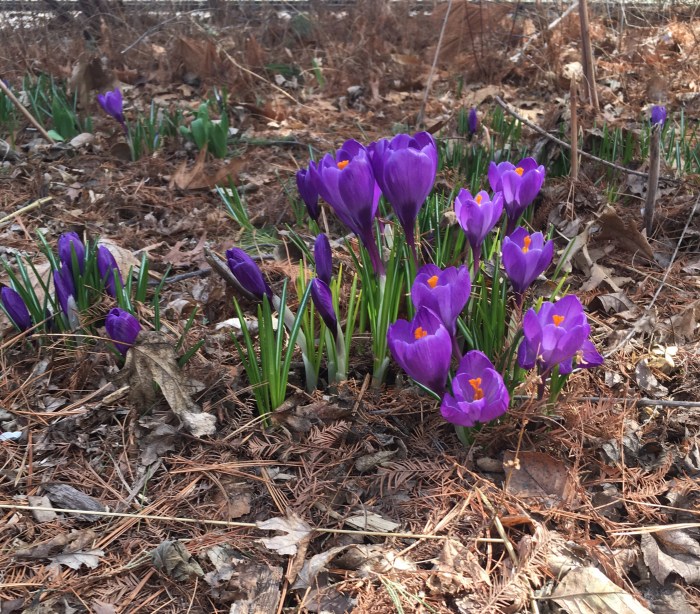
As the weather is getting warmer and the flowers

are popping up, God is reminding me of seasons.

Our lives are built in seasons. We all go through seasons of pain, growth, and contentment as well as seasons of adventures, happiness, and joy. Sometimes, it changes with nature. Other times, it doesn’t. You can go through 3 personal seasons before nature runs the course of 1, or one season can last forever.

We are entering the season of rain and flowers. But without the rain, there would be no green grass or flowers.

This is Holy week in the Christian faith-the week where we acknowledge Jesus’ last days on earth before He was crucified. He had to die before He could be raise up.

Seeds have to be buried in order for them to grow.

There are many things in life where the not so pleasant comes hand in hand with the joy.

I’m learning this lesson firsthand. It’s frustrating when things don’t cooperate—my hand doesn’t listen when I tell it to roll a ball at a target or my legs don’t cooperate when I tell them to jump or hop. But, after a bit of work (sometimes crying and quitting for a time), they start to listen and the joy my soul feels at being able to do something again is insurmountable.

As this year has done on, I’ve been able to check things off my list and feel more like a normal 23 year old.

—flew by myself…check!

—drove myself to coffee…check!

—swam…check!

These are just a few of the many things that make me feel just a little bit like my old self.

As the rains come, remember without a little rain, there won’t be flowers.

Spring is coming, just be patient.

God is good.

So, I’m going to be honest-really vulnerable-with you.

I keep repeating the mantra “God is good. God is good to me. God is good at being God.” from Lysa TerKeurst, but I don’t know if deep down I truly believed them for a time.

I keep saying “this is the year of me”, but not doing anything to promote my healing.

I believed wholeheartedly that “God is good and He has a good plan” right after my accident, but the longer the journey has taken, the more I’ve found myself doubting that truth.

Life is hard.

It’s hard seeing friends do things that you used to be able to do. It’s hard. It’s hard wanting to do everything, but having to pace yourself. It’s especially hard looking forward to something but right before you leave, your brain is not having it. Life is simply hard.

Life is messy.

It’s messy when you make progress but not as much as you would like. It’s messy to want to socialize but your brain hates people.

When you’re in the valley, it’s easy to doubt the goodness of God, especially when you’re in the valley for longer than you thought you would be. This is what happened to me. I knew God was good and His plan for me was good, but recently I struggled to believe it in my soul. Life is harder than I thought. Recovery is a lot harder than I anticipated. On the 17th, it will be 15 months since my accident. I’ve come a long way, but I’m nowhere near where I desire to be. I got angry at God. I yelled at Him, wondering why he chose to save me, but not heal me completely? I shook my fists at Him, wondering why life was so hard now—why I’m 23 going on 93 (sometimes it feels that way). I feel like my youth has vanished.

The funny thing about God is that He wasn’t upset with me for being real with Him, but He didn’t let me stay there—in the pit. He put people in my life to encourage me to rise up out of the mud. It was my choice to listen to them. My mom confronted me about this fact. I was saying these things but she wasn’t seeing me do anything. I wasn’t doing therapy. I got back to driving, but that was about it. It was hard, but good having her say that to me. I didn’t really notice that I was even doing that, until she brought it to my attention. She challenged me, “Do you believe that God is good and that he has a good plan for you?” That rocked me. I thought about that and my gut response was “no”. I knew that it should be “yes”, but it was “no”. Over the next couple of weeks, God used songs and people to tell me “You are loved. You are loved more than you could ever know. I’ve got a good plan for your life. It’s hard right now, but good things are coming.”

So, I’m still struggling to figure out how to believe that when things don’t work out the way I want them to, but I believe it more than I did last month.

God is good.

God is good to me.

God is good at being God.

So, I’m choosing to believe that and fall in love with being alive.

“Because God’s writing your story and He never leaves you alone in your story, and His perfect love absorbs all your fear and His perfect grace carries all your burdens, and your story is a happily ever after because Christ bought your happily ever after so you always know how this story ends.”

Ann Voskamp

Where’s Home?

12 years ago, my life changed drastically. I moved back to the states.

For only being 23 years old, I’ve had three life changing things happen. Moving back was the first. My parents were missionaries so my theology was shaped by dry deserts and dirt floors. From when I was only 3 months old, I grew up in strange culture, only it wasn’t strange to me. I grew up speaking British English and chasing spiders.

When I moved back, everyone said I was coming home, but this culture was strange.

This year, March 17, marks 12 years that I’ve been in the states. After March 17, I will have lived in America longer than I lived in Nigeria.

This is bittersweet. Most people won’t fully understand the significance of this year, but I want to honor the country and people that played a significant part in the shaping of who I am today.

Here’s 4 things I learned:

  1. Cultures are vastly different. In America, there were so many choices-so many things. My brain often got (and still gets) overwhelmed at the grocery store because there are 10 choices for 1 item. Time is linear, here, rather than circular. This moment in time was thought to never come around again which was the exact opposite of Nigeria. If you had planned on doing something, but someone stopped by, you would focus on that person because the time to do that thing would come around again. I, also, grew up in a relationship focused culture rather than a time focused culture. The culture was dictated by relationships rather than the clock. If someone stopped by, you would drop everything and welcome them. People matter first.
  2. It is possible to put roots into people as opposed to places. Places are important. While staying is just as important as going, sometimes, it’s hard to call a certain place “Home”. Home to me is people. I’ve put down roots into people—people that I’ve established as being important in my journey that is called life. I’ve nurtured those roots—watered them. It doesn’t matter the location of the people that a well place elephant picture or song can’t make them seem closer. If we get the chance, coffee dates are my love language, and I love discussing life over coffee. I put roots into people. Even after my TBI, I remember most people but situations and places are fuzzy . I think it stemmed from my transitional childhood and the fact that relationships were greatly valued. Don’t get me wrong, places matter, as my spiritual formation has been shaped by lush green springs, the grey, rainy days, the vast deserts in Africa, the blue-green oceans in Haiti and the magnificent mountains in Montana. God has met me in so many places in the reality of my nomadic past and He often used people.
  3. My heart is big enough to hold many places—more places than I even know. When I first moved back, I couldn’t imagine loving this country as much as I loved Nigeria. Nigeria is still my heart’s home but this country has grown on me. The first time I went to Haiti I didn’t know that it—the country itself—would worm its way into my heart. My heart was stolen by the people and their generosity. The first time I went to Montana, my soul felt free and I fell in love with the mountains and the people. When I went to the Dominican Republic, I didn’t know that my heart had room for another country, but it did. My heart made room for the DR, and it stamped itself on my heart. My heart holds those places closely and now, I know that my heart can hold so many more places.
  4. Normal is overrated. When I first moved back, I felt like I had a stamp on my head. I felt like I had to explain to everyone why I was so weird-why I didn’t know what movies, books or songs were popular or why I knew more about the current events than musical artists. Someone would tell a joke and I would laugh even though I had no idea why it was funny. I just didn’t want to be the only person not laughing. I was trying so hard to be “normal”. I wrestled with insecurity because I was not like everyone else. Over time, I learned to see the value of my experience. It made me a more diverse and well-rounded person. I may be different, run on African time, and not know what is currently popular, but I wouldn’t trade the experience for anything.

5 Things You Don’t Know But Should Know About Brain Injuries

March is Brain Injury Awareness month. Brain injuries are becoming more known because of the NFL, but we are still just tapping the iceberg.

1. You won’t be able to tell someone has a brain injury. Right after my accident, you could tell something was wrong. My eyes weren’t focusing. I wasn’t moving my right hand at all. Now, through, I still have a brain injury, but I look “normal”. If you didn’t know my story, and I simply met you on the street, you would have no idea the year I’ve had. It’s an invisible bruise.

“I live by my systems. I have to have a schedule or I am lost….Also, just because I look OK doesn’t mean anything. I have worked for years to get where I am now.” — Nancy Davis

2. People with a brain injury are not stupid, they simply process information differently and slowly. Everyone pictures a person with a brain injury as someone in a wheelchair drooling. This is often not the case. I know people who were civil engineers before their accident. Their TBI affected some of the way they did things, but they can still do what they did in some capacity. I know for me, I used to be able to look at something and remember/recognize it. But now, it takes a couple of times of reading it to maybe remember it. That is no way means I’m less smart than I was, it just looks different. Also, if someone asks me question after question, my brain gets overwhelmed and shuts down. People need to ask me one question and give me time to process the question before I can give an eloquent answer

“My brain takes different paths to understanding and explaining. It’s not a straight road, but one with detours.” — Keli Hanks

3. They aren’t lazy, they just need a lot more rest to function on a “normal” level.

I need to figure in more rest time now than I used to because without it, I hit a wall and am literally useless to anyone. You think about how much your brain is involved in. A while ago, my sister and I were out to lunch. I was quiet so she asked me what I was thinking. I said, “Drinking water.” There were no other thoughts in my head but the act of raising the cup to my lips and drinking the water. Your brain is involved in every act of every day. No wonder we are wiped out all the time.

“Remembering things is difficult. I’m not being lazy by only working a few hours a day or needing days off during a busy time — I just need more rest to function than you do… Changes take time for me to adjust to. What works for one person doesn’t always work for me.” — Sara Hill

4. A brain injury changes a person, not simply because it’s traumatic, but it changes the chemistry of the brain itself.

In a simple way, I used to be way more extroverted but now I’m a lot more introverted to the extent where I’ve had conversations with people only to discover that they went on solely in my head. I’ve also become significantly more OCD. I have to have everything just right, and it bothers me if one thing is out of place.

“My injury may be invisible, but my life has been turned upside down. I will never be the same again.” — Christina Chalgren

5. TBI individuals are some of the bravest people you will ever meet because they have survived something that was meant to destroy them.

Habits of Grace

The early church started simply—radically simple as believers met together, lived life together and shared what they had to meet the needs of the people around them.

In the book of Acts, the early church consisted of a small house, in a small city, in a small country to be the place God first sent His Holy Spirit. The church consisted of everyday people who were simply willing to be the hands and feet of Jesus by receiving His Spirit. Christ worked through Peter’s sermon that first day, spreading the gospel so that thousands heard the good news (Acts 2:14-40). That first sermon spread the gospel beyond the influence of the small circle like a holy ripple effect, as the Holy Spirit empowered each new believer to live transformed doing revolutionary things like selling everything to meet the needs of the people around them, and doing life with other sinners around them. The early church, through the Holy Spirit, learned to do life together in simple, intentional, and gracious ways.

The Spirit moved in ways that they could only imagine. The gospel continued to spread through the region regardless of the opposition that it received. Stephen, boldly, stepped out and challenged the generational idols. He lived by the Spirit to the point that as he was arrested and stoned, He proclaimed Christ. He continued to preach his guts out for the glory of God. He did not stop telling the world about the truth with his last breath.

Neither did the early church. The most common reaction to a tragedy like that would be to withdraw and allow emotions to settle down.

The Church did not back down. They continued to share the truth about Jesus regardless of the persecution they received from all sides. In their humanity, they could have recoiled and retreated after the tragedy. Instead, they were committed to love others for the sake of Christ without regard for their own lives. They proudly professed their faith wherever they went.

Thus, the gospel spread. The church scattered but not running to hide, rather it propelled them out to share the gospel in every corner of the world. Like a wave in the oceans, person after person impacted the communities they were placed in, and the gospel spread like wildfire to the ends of the earth.

The Christians did not simply wait for the Pharisees and opposition to challenge them, before they chose Jesus. They made Jesus and the gospel the most important thing in their life. They made the decision to follow Him all or nothing before they were placed in the situation to choose.

You do not simply decide to do something and immediately become good at it, rather you put in the time and effort into preparing, learning and training.

It is like a marathon. You do not simply go out one day and decide to run a marathon.

If you do, you will fail.

You train slowly over time, building up endurance, stamina, and speed.

You train and prepare to succeed.

Benjamin Franklin wrote, “By failing to prepare, you are preparing to fail”. No truer words have ever been spoken.

Could you say now you would do if someone told you to deny Christ and die, like Stephen? The common response made by people today is “I hope I would….,” or “I believe that I would…., but one can’t know for sure until placed in that situation”.

The reality is that you can decide now.

You decide today what decision you will make at that moment when you are asked to lay your life down for the one who died on the cross for you.

It is a daily decision. One in which you choose Jesus day in and day out-practicing a habit of grace-living our daily lives as a testimony to the Holy Spirit inside us.

We choose to love the people around us. We invest in the people God has placed us in the vicinity of-choosing to do life with them. Bravely choosing to invest in the messiness of what it means to be a human living in community with other sinful humans.

Here is where grace comes in.

Grace. The realization that we are sinners and do not deserve the unmerited favor placed on us by the Creator of the universe.

But accepting the grace extended to us means we can be used by God throughout the simple actions of everyday life.

The grace extended by God to us today allows us to live into the same power of the Holy Spirit that the early church embraced. We can choose to live into the vast amount of untapped treasure we have at our disposal.

God still moves in vast ways today as we choose to enjoy getting to know Jesus, our loving Savior.

The reality is that is in the daily devotions, the prayer, and the fellowship with Jesus and others where you develop the habit of choosing Jesus in the small moments. You begin slowly building and deepening the relationship with simple habits of grace.

Vulnerability.

Vulnerability. Community.

These words are used so often in resident life at Christian colleges that they begin to lose their meaning. We say things like “build community”, “be vulnerable and open”, and “facilitate community”.

Do we really know what we are asking for when we say these buzz words?

Vulnerability and community are incredible and beautiful aspects of belonging to a group of people. I have been blessed to be a part of a group that consistently reminds me of the value of these qualities. I’m not afraid to tell them if I’m having a bad day or I’m struggling keeping my thoughts positive.

“Vulnerability is not weakness, and the uncertainty, risk, and emotional exposure we face every day are not optional. Our only choice is a question of engagement. Our willingness to own and engage with our vulnerability determines the depth of our courage and the clarity of our purpose; the level to which we protect ourselves from being vulnerable is a measure of our fear and disconnection.”
― Brené Brown

As humans, we believe that showing people our true selves—our hurts, our desires, our passions, our insecurities—reflects that we are weak. In modern society, sharing our emotions is weak, and weakness of any sort is unacceptable. We try so hard to hide the messiness of our lives behind a thin-lipped smile or stifled laugh. We play pretend.

The reality is that vulnerability requires bravery. We are not weak when we share this part of ourselves with others. The part we hide behind our façade of “I’m OK. I’m tired. I’m busy”. These are safe answers when we do not desire to share our heart with other people. They are barriers that we need to put up because we cannot share our deepest desires and darkest secrets with every random person with whom we come into contact with.

Choosing to be vulnerable is risky and scary, but so much more rewarding than I could ever imagine. It opens the door for significant conversations about real life—the triumphs, the trials, the hurts. The very definition of the word vulnerable means “capable of or susceptible to being wounded or hurt, open to assault, or difficult to depend”. When we become vulnerable with other people, we are choosing to enter into this place where we open up our hearts and lives to the point where we can get hurt. This place of unknown emotions where we share our souls with other individuals. I have been challenged this semester to be real, genuine and vulnerable with the people God has placed in my life.

My default setting is to simply assume that everyone could disappear because I have moved so many times. As a result, it is hard to be vulnerable and open with people because the more I open up, the greater the possibility of hurt.

The reality is that I can avoid getting hurt by putting up barriers, but what would I miss out on?

Deep conversations about God at 3 am.

Watching God reveal strengths in my life that others point out to me through my weakness.

Accepting that I am broken so that people can see God as he works in my life.

Sharing songs that speak to my heart with a dear friend.

Sharing my story with people who truly listen.

Reflecting God’s vision of community as we forgive and love each other in our brokenness.

As I challenge myself to be audacious, I decided to choose vulnerability.

To share my heart’s story with my closest friends. To speak the truth in love. To reveal pieces of myself in layers. To not hide behind the masks I put up to protect my heart.

The more I hide behind our masks, the more hurt I become because I feel truly alone in this big, challenging world. Sometimes, all it takes is realizing that someone else struggles with the same vices or doubts. We all have wounds. We all have hurts that cause us pain. There lies that deep-seeded loneliness that emerges in the midst of every success, the feeling of worthlessness that hides behind every accomplishment, and the meaninglessness that sneaks up on the good days which causes us to seek validation in human company, not God.

When you choose to be vulnerable, you allow people to enter into the story of God’s redemption in your life.

We do not feel so alone.

The Christian walk is not one that we can do by ourselves. We need to be surrounded by people who encourage us in our journey, who move us closer to God, and challenge us to keep trusting in God’s timing.

Vulnerability is a choice that is make every day as I choose to take off my mask and simply be a broken person loving broken people.