Here’s to Hoping This Season Isn’t Forever

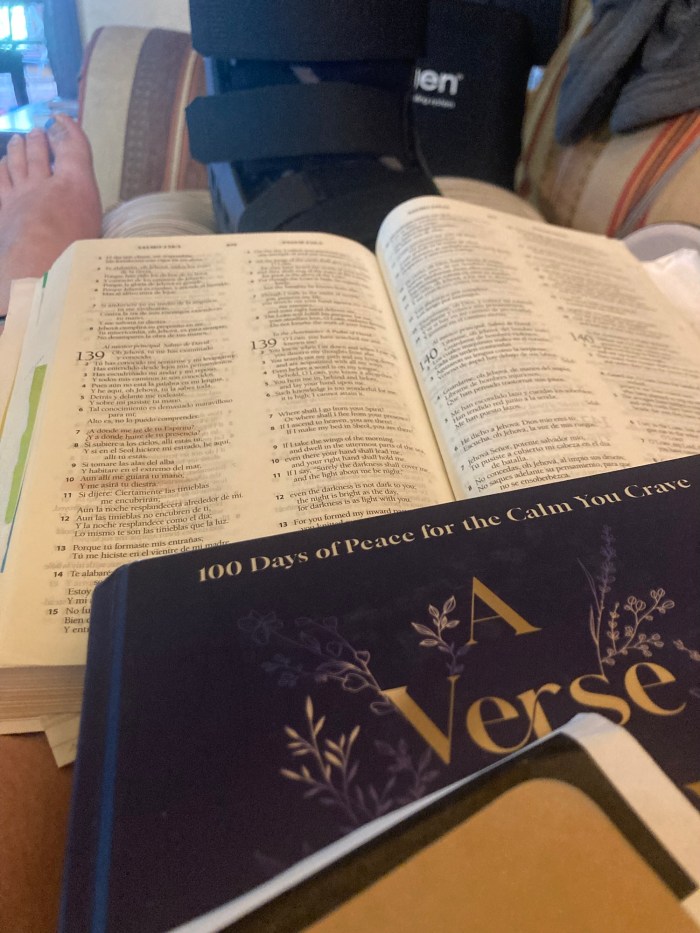
I’m coming up on four months of being non-weight bearing.

When this all started, I never imagined this season would last this long. If I’m honest, it’s probably been one of the most frustrating seasons of my life. There are days when I wonder if it will ever end.

I’m doing everything I’m supposed to do. I’m following the plan. I’m resting. I’m being careful. My foot is healing…just slowly.

That’s one of the things I dislike most about healthcare: it rarely fits neatly into black-and-white boxes. Bodies don’t always follow timelines. Healing doesn’t always look the way we expect it to. Sometimes the only option is to pivot.

Life is funny that way.

As a nurse, I want things to be straightforward for my patients. I want clear answers and predictable outcomes. As a patient, I want the exact same thing. I wish healing happened faster. I wish hard work always produced immediate results.

But this season has taught me—or maybe reminded me—of a few things.

God is near to the brokenhearted.

There have been seasons in my life where I’ve been so overwhelmed that I didn’t even have the words to pray. If you’ve never been there, it’s hard to explain that kind of despair. And honestly, I hope you never have to experience it.

Yet somehow, it has been in those moments that I’ve understood God’s heart the most. It’s funny—even when I’ve been frustrated or angry with Him, He’s never been offended by my honesty. He has simply stayed near.

People can be the very best.

I don’t think I’ll ever take for granted the power of a smile, a text message, a meal, or a kind word again. I’ve been amazed by the kindness of strangers and the generosity of acquaintances who have offered rides, checked in, or simply sat with me when I needed someone to talk to. Those small acts of kindness have carried more weight than they’ll probably ever know.

Sometimes God slows our bodies to still our hearts.

If you know me, you know I’m a doer. I love a full calendar, a checklist, and a plan. Slowing down has never come naturally to me.

But maybe that’s exactly why I needed this season.

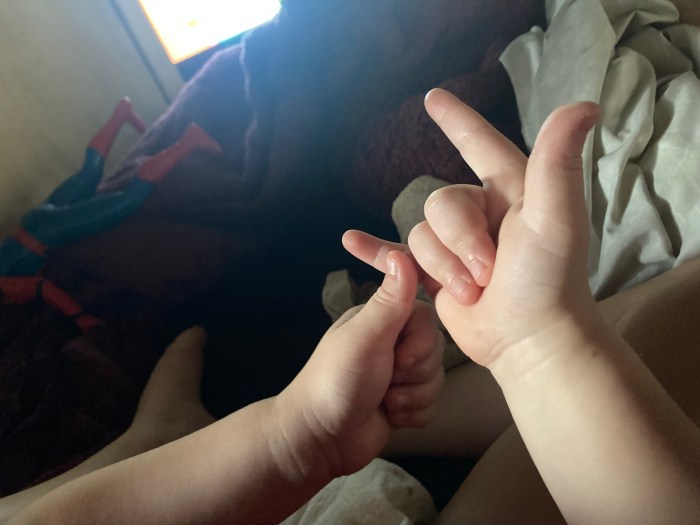
Atlas will only be this little once. These extra cuddles, slower mornings, and moments I never would have paused for before are gifts I might have missed if life had continued at its usual pace.

I still don’t like this season. I wouldn’t choose it. I still hope it ends sooner rather than later.

But even here, God has been faithful.

So here’s to hoping this season isn’t forever—and trusting that even if healing takes longer than I hoped, it won’t be wasted.
The Hard and the Holy

This summer has been nothing like I imagined.

I pictured running through Kingwood Gardens with my toddler, swimming in lakes, and finally enjoying being back on two feet again.

Jokes on me.

Let me be incredibly transparent.

Transparency and authenticity are not new things for me. Since my accident in 2016, I have realized what a gift authenticity can be. I’m not saying we should air all of our dirty laundry or share every hardship with everyone in every setting. But I do believe there is beauty in letting people see both the messy and the holy parts of our lives.

For years, I looked at other people and compared myself to the polished version of them I had created in my mind. Unsurprisingly, I always came up short. Social media doesn’t help because most of us naturally share the highlights, not the heartbreak. I was recently reminded how dangerous it is to assume everyone else has it all together when we only know the edited version of their story.

What if we were just a little more honest—with ourselves and with each other? What if we shared both the hard and the holy?

If I’m being honest, I’m tired of life being hard.

I know God uses difficult seasons to shape us and refine us. I believe that with my whole heart. But sometimes, in the middle of the night, when my fears are louder than my faith, I quietly wish He would stop refining me for a while.

Don’t hear what I’m not saying. I’m not saying God caused my accident or my broken foot. We simply live in a broken world where painful things happen.

I joke that my broken foot makes me a better rehab nurse because I can better relate to my patients. Truthfully, though, my accident already taught me that lesson. So I’ve found myself asking, What am I supposed to learn this time?

Surprisingly, this season—and honestly, both of these seasons—hasn’t been about learning how to endure pain. It’s been about learning to be confident in who I am and in the skills God has given me while still being humble enough to admit I have so much left to learn. Growth requires both confidence and humility. If we stop learning, we stop growing.

So maybe that’s really the point of all of this.

Not that we have all the answers.
Not that we pretend everything is okay.
Not that we wait until our story is wrapped up neatly before we share it.

Maybe we’re simply meant to let people see the whole picture.

Because when we have the courage to share both the hard and the holy, we create space for someone else to say, “Me too.”

And I think we’d be surprised by how many people understand.

Truth Louder Than Fear

I have this very bad habit of lying to myself.

I get caught up in my head, allowing negative thoughts about my abilities, capabilities, and worth to weave themselves into my life.

“You are not good enough or pretty enough.”
“You cannot do that.”
“Well, they only decided to hang out with you because you kept bothering them.”
“See? You do not know as much as you think you do.”
“They probably do not even want to be around you.”
“Do not even try because you will fail.”

These lies feed my insecurities and slowly suffocate my desire to be brave. I begin second-guessing my abilities and spiraling deeper into believing the statements running through my head.

It does not help that I am an overthinker. I read too much into my own actions and the actions of others. These toxic thoughts hold me back from being bold in the face of new challenges because they fill me with fear—fear of failure, fear of rejection, fear of not being enough.

The past couple of weeks have felt like a constant battle as those lies flooded my overwhelmed soul, trying to convince me that I have no idea what I am doing, that I will never fit in, and that I will never truly be enough.

I hate failing. I hate doing things that I know I might fail at. So instead of stepping out bravely and risking failure in friendships, adulthood, or even my new job, it became easier to hide behind my toxic thoughts.

In the quiet moments, I allowed those lies to keep weaving themselves into my mind, so instead of the quiet feeling refreshing, it became unbearably lonely.

Ashamed, I admit that I failed at living audaciously because I allowed fearful thoughts to trap me inside the safety of my comfort zone.

Ironically, I failed anyway—the exact thing I was trying so desperately to avoid.

Truthfully, I have always hated doing things I knew I would not immediately be good at. If I thought I might fail, I usually ran in the opposite direction and played it safe.

And during all this change, I did the same thing emotionally. I clung tightly to the people, routines, and places that felt familiar instead of allowing myself to branch out, build new friendships, and create new rhythms.

But here is the reality: I will probably fail at something. Maybe even a lot of things.

I cannot spend my life standing still simply because success is not guaranteed.

The thoughts that hold me captive in fear are lies, and they need to be rebuked and pushed aside.

Instead, I need to fight back with words that breathe life into my soul.

“You can do this.”
“You are enough.”
“You are beautiful.”
“You may fail, but you will learn and grow from it.”
“You are loved.”

These are the truths I need to weave into my heart until they become louder than the lies.

Somehow, it has always been easier for me to speak these truths over other women and other people than it has been to believe them about myself.

But my challenge in this season is this: to remind myself that I am brave, capable, confident, and fearless in the face of lies trying to steal my joy.

And maybe you need that reminder too.

You are brave.
You are enough.
You are loved.

God created you with purpose and intention. Yes, you will probably fail at something—but do not let the fear of failing keep you from fully stepping into the life you were meant to live.

You Don’t Wait for Recovery-You Choose It.

If you want a glimpse into what goes on in my head—or in the minds of those living with a brain injury—read this book-I’ll Carry the Fork. 

Kara Swanson shares, in a lighthearted and honest way, the realities of life after a brain injury. Brain injuries are like snowflakes—no two are exactly the same—but there are threads that connect many of our experiences.

Here are a few truths I’ve learned along the way:

It’s hard—but necessary—to rely on others.
There is something incredibly humbling about needing help with things you once did independently. Admitting you need help is hard, but it’s also where connection and growth begin.

You choose when you’re recovered.
Recovery isn’t the absence of symptoms. It’s the moment you decide to move forward despite them.
“We are the only ones who can choose when we are recovered…when we stop waiting for our old lives to return on handsome white horses.”
At some point, we stop waiting—and start becoming.

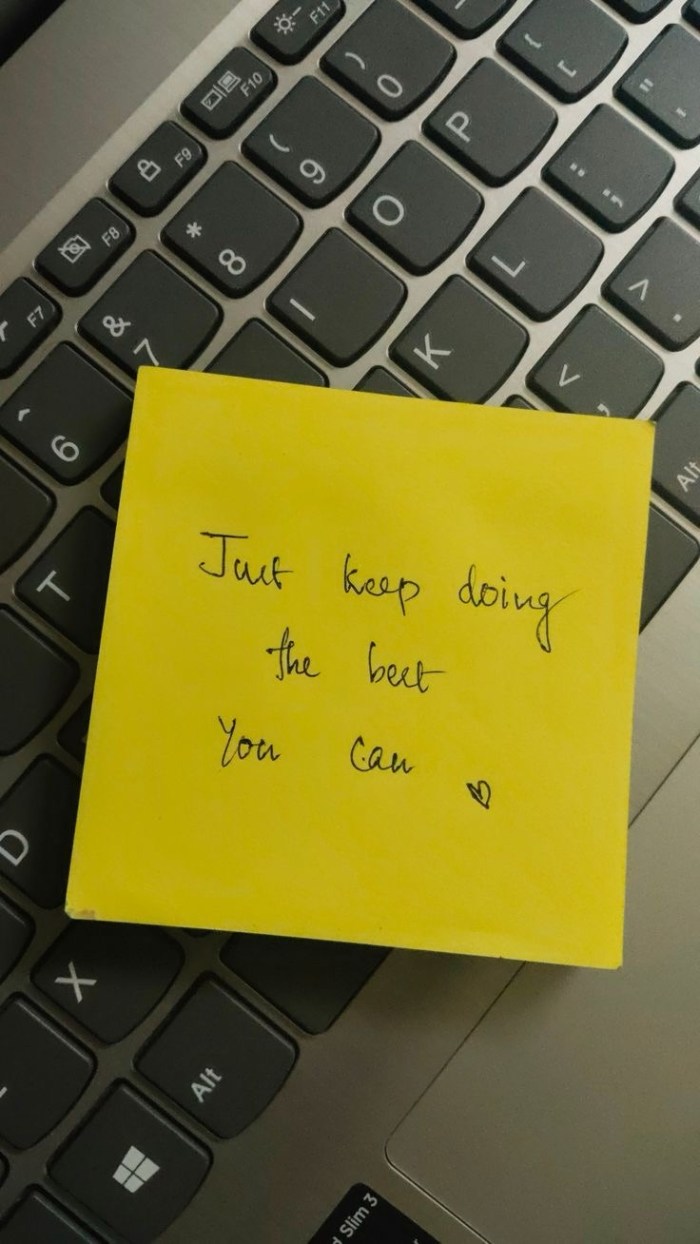
Post-it notes are your friends.
When memory fails, sticky notes step in. Bright colors, little reminders—tiny lifelines. (Yellow is my favorite…a little bit of sunshine on hard days.)

Attitude is everything.
Those who say they can’t and those who say they can are both right. Belief shapes effort. Effort shapes outcomes.
In my case, my stubbornness finally had a purpose.

Forgive. Forgive. Forgive.
Forgive the people who are well. Forgive the life you didn’t choose. Forgive the injury itself.
Holding on to bitterness only weighs you down. Let it go—not because it’s easy, but because it’s freeing.

Thank the people who jumped in the hole with you.
I didn’t choose this. But the people who stayed? They did.
They chose to walk through the hard, to sit in the unknown, to love me through it all. And for that, I am endlessly grateful.

Nothing has power over you unless you give it that power.
A brain injury changes your life—but it doesn’t have to stop it. We still get to choose how we live within it.

Fill the holes in your life—before they fill themselves.
Fill them with people who lift you up. With kindness. With truth. With hope.
Find the ones who remind you who you were, who understand who you are, and who believe in who you’re becoming.

I’ve found those people. And I thank God for them.

The Hard and The Holy

As I’ve been thinking about life—the hard and the holy, I’ve been doing a little reflecting. December 17, 2016 will always be a significant day. On one hand, it’s the day I survived. On the other, it’s the day my life changed forever.

Here are a few things life—and my brain injury—have taught me over the past nine years:

You only live—and die—once.
This moment, right here, right now, is the only one you’re guaranteed. Tomorrow isn’t promised. So kiss your spouse, spend time with your siblings and friends, put down your phone, and show your family you care.

You can do anything—within reason—that you put your mind to.
God was gracious in allowing me to recover the way I have—but it wasn’t without tears, frustration, and yes… some attitude. (Sorry to my family for all the tears—and thank you for loving me through the pity parties without letting me stay there.)

Nine years ago, I couldn’t imagine the life I’m living now. And I don’t say that for applause. I say it to show two things:

  1. How good God is, and
  2. What determination and hard work can do.

There was a time I almost gave up on the idea that my life could look anything like I had dreamed. My brother could list all the things I said I’d never be able to do again. At the top of that list? Working as an acute care nurse.

But I did it-and I’m a Rehab nurse at that. Life comes full circle.

And it was hard—honestly harder than nursing school. I had to relearn things I once knew, all while managing migraines, needing more rest, and dealing with hands that didn’t always do what my brain told them to do.

I didn’t know what I’d be capable of until I tried.

So—don’t give up.

There are many paths in life. Don’t compare yours to anyone else’s.
I have to relearn this lesson often. Maybe you’re 20 and living your dream. Maybe life took a turn and you’re still working toward it. Maybe you married young, or maybe you’re still waiting.

There is no “wrong path” when it comes to your story. You didn’t miss your chance. Your life isn’t ruined because it looks different than you expected.

Your story is your story.
And someone out there needs it.

Rest is necessary—and good.
I’m still not great at this. I tend to go, go, go… until I hit a wall and crash for 24 hours.

But I’m learning.

I’m learning the power of a well-placed “no.”
I’m learning that rest doesn’t always mean sleep.
Sometimes it’s a quiet night watching a movie with Sean.
Sometimes it’s a walk outside in nature.

I may not love that I need more rest now—but I’m learning to respect it.

Sometimes, you have to take life five minutes at a time.
Looking too far ahead can be overwhelming. It can freeze you in place.

I’ve learned to focus on the next five minutes… and then the next.

That’s how I get through hard days.
That’s how I keep moving forward.

Sometimes love doesn’t look the way you expected.
I’m a romantic—but not the “love at first sight” kind.

In my story, love looked like friendship first.

There was a time I couldn’t imagine letting someone into my world—because I didn’t even understand my own brain yet. I was still figuring out who I was… and if I even liked that person.

But there was someone who stayed.
Someone who chose friendship.
Someone who was willing to learn me—my brain, my struggles, my healing.

I still don’t fully understand how he does it—but he does.

And somehow, through friendship, I let him in.

These are just a few of the many things the past nine years have taught me.

Brain Injury Awareness: What You Don’t See Still Matters

March is Brain Injury Awareness Month—and March 20th is World Head Injury Awareness Day.

Did you know that mild traumatic brain injury (mTBI) is often called a “silent epidemic”?
It’s deeply misunderstood—even within the medical field.

Here are a few things I’ve learned while living in the world of traumatic brain injury:

Brain injuries are like fingerprints—similar, but never the same.
Every brain is different, so every injury is different. Many of us experience challenges like difficulty focusing, memory issues, speech problems, balance issues, and more.
The first time I attended a TBI support group, I realized something powerful—I wasn’t alone. Hearing others share experiences that mirrored mine made me feel seen in a way I hadn’t before.

We have good days and bad days—just like everyone else, but different.
There are “good brain days” and “bad brain days.” Things like fatigue, dehydration, blood sugar changes, or overstimulation can completely shift how we function.
Some days I can do something with ease, and the next day that same task feels impossible. I’ve learned to embrace the good days and give myself grace on the hard ones—and to listen when my body tells me what it needs.

We are not our disability.
This took me a long time to understand. I used to feel like I had to explain why I was “different.”
Now I know—I have a TBI, but it does not define me. Yes, it impacts my life. But I’m also just a 20-something learning how to navigate adulthood, like everyone else.

We’re still figuring ourselves out—even years later.
I’ve met people whose injuries happened over 15 years ago—and they’re still learning who they are now. Recovery isn’t a finish line. It’s a lifelong process of rediscovery.
At some point, healing becomes less about looking back and more about moving forward—embracing both the challenges and the growth.

TBI survivors are some of the strongest people you’ll ever meet.
Because every day, they are overcoming something that was meant to break them.

#BrainInjuryAwareness #TBIAwareness #mTBI #InvisibleIllness #BrainHealth #YouAreNotAlone #ChronicIllness #MentalHealthMatters #HealingJourney #SurvivorStrong

“Nine Years Later: Living, Learning, and Parenting With a Brain Injury.”

March is Brain Injury Awareness Month 🧠

I really didn’t think I would still be struggling with things nine years later. But here we are — nine years later — and migraines still knock me for a loop.

I’m just going to be honest here… my brain injury has complicated this season of life as a student and a parent. It has made my “normal” TBI symptoms — migraines, forgetfulness, and brain fog — worse at times. Migraines like that are fewer and farther between now, but when they hit, they knock me down because I’m not expecting them anymore.

It’s in moments like this that I wish so badly to just be normal. But then I remember something important: this injury didn’t take away who I am — in many ways, it added to it. I’m the person I am today because of it.

So during Brain Injury Awareness Month, here are a few things to keep in mind when interacting with people who may have experienced known or unknown head trauma.

Every injury is different.
You may know someone who had a brain injury, but that doesn’t mean you know this person’s story. I understand the desire to relate, but sometimes the best thing you can do is simply listen. Their story might surprise you.

Thinking differently doesn’t mean we are less intelligent.
Can I be vulnerable for a moment? This is one of my biggest fears. On bad brain days, when words get stuck and my thoughts feel tangled, I worry people will think I’m incompetent. I know I shouldn’t care so much about what people think — but I’ve worked incredibly hard to get where I am. Words might get caught sometimes, but that doesn’t mean the thoughts aren’t there. If anything, I know I’m just as smart — if not smarter — than I was before my accident. And honestly, I’m doing things now that I once thought would be impossible.

“Invisible” disabilities are still disabilities.
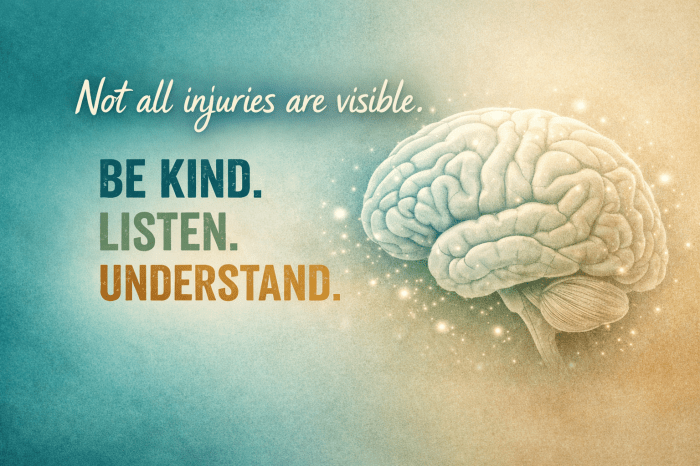
Just because you can’t see everything someone is dealing with doesn’t mean it isn’t real. Many people with brain injuries are fighting battles you’ll never notice from the outside.

These are just a few ways we can create a little more understanding and acceptance for people living with brain injuries.

Thanks for reading my thoughts. 💛

Brave with Abandon

Abandon.

Not the kind that leaves you empty—but the kind that flings you forward.
This is the word I chose for my year, and somehow it already feels prophetic. We’re barely two months in, and it’s been a whirlwind of surrender, fear, faith, and boldness.

It started with panic. The clinical program I thought I had secured fell through, and suddenly everything felt uncertain. I scrambled, prayed, and questioned—until, at the very last minute, it worked out. God has a sense of humor. I think He saw me getting a little too comfortable and decided to remind me who’s actually in control. (Spoiler: it’s not me.)

Now, I’m in a clinical program that stretches me daily. It pushes me beyond hesitation, beyond comfort, beyond the safety of staying small. And in that stretching, I’m learning what it means to chase my calling with abandon.

So far, this year has already taught me a few things—lessons I didn’t ask for, but desperately needed.

First, bravery isn’t the absence of fear—it’s obedience in the middle of it.
There is so much to be afraid of, and motherhood multiplies that fear. If I could, Atlas would live in a bubble where nothing could touch him. Anxiety is my constant companion, and I work hard to keep it from shaping him. He is fearless, wild, curious—and I don’t want my fears to become his limits. Some days I succeed. Some days I fight my own heart just to let him be brave.

Second, nursing is not just a job—it is a privilege.
Yes, it’s exhausting. Yes, it’s often thankless. But it is sacred. Being invited into people’s most vulnerable moments is an honor. There are days filled with heartbreak and injustice, when bad things happen to good people. Nursing isn’t glamorous, and when you forget your “why,” burnout isn’t far behind. Remembering that this is a calling—this is a privilege—keeps my heart anchored.

And finally, balance is not optional—it is survival.
Work-life balance gets tossed around like a trendy phrase, but for me, it is the difference between being present and being depleted. Without it, I’m miserable—internally and externally. Date nights are a must, even when they’re simple. Sometimes it’s a quiet moment after a long day. Sometimes it’s takeout on the couch. The point is connection. I need time with my favorite people to be the best version of myself. I’m choosing to love them—and myself—with abandon.

We’re only at the beginning of this year, and already God is teaching me what it means to live wide open—to trust, to leap, to love without holding back.

So buckle up.
It’s going to be a wild year.

Nine Years Later: Choosing to Live With Abandon

Nine years.

It has been nine years since that awful night when life as I knew it was ripped out from under me. Nine years since everything shifted—since the trajectory of my world suddenly bent in a direction I never expected.

Nine years.
It somehow feels like forever ago and yet also like just yesterday.

Even now, I still feel the ripple effects of that night. Driving in the snow this week stirred up old fear I wish wasn’t still tucked so close to the surface. I found myself waiting for the other shoe to drop—a tension I’ve lived with ever since.

And that’s the strange thing: life is going well. Genuinely, beautifully well. But it was going well before the accident, too. I had finally become a nurse. I was living on my own. I had my first big girl job at Akron General. My life felt steady, hopeful, full of promise and momentum.

Then it all changed.

There are moments that become dividing lines in our lives—the kind where time splits into before and after. Where a single night becomes the landmark everything else measures itself against.

For me, the accident is that line.
It changed the trajectory of my life in ways I am still living, still learning, still navigating.

And yet…
I am still here.

I am still breathing.
Still loving.
Still healing.
Still living a life I almost didn’t get to keep.

Every year, I choose one word to anchor my heart—something to shape how I move through the months ahead. For 2026, my word is ABANDON.

Not reckless abandon.
Not careless abandon.

But the noun form:
A complete lack of inhibition or restraint.

This year, I want to live my life with abandon—the life I’ve been given back. I want to love my husband and my child with abandon. I want to chase my dreams with abandon. I want to pursue Jesus with abandon. I want to lean fully into the life right here in front of me, instead of living in hesitation, fear, or waiting for something to go wrong.

I already know this about myself: I love hard. I feel deeply. I show up with everything I have. And while that sometimes feels vulnerable and messy, I do not regret loving that way. Not for a second.

So this year, I’m making choices that help me live presently and intentionally.
I want to be with my people—not just near them.
I want to show up in the holy moments and the hard ones.
I want to embrace the messy glory of being alive.

Nine years later, I am still here.

And this year, I choose to live—fully, openly, and wholeheartedly—with abandon.

What You Don’t See On My Good Days

Life Is Hard… and I’m Still Here

I’m tired.
Tired of life feeling like so much work.
Tired of the fact that “doing anything” takes more energy than most people will ever know.
Tired of living with chronic pain.

But at least I’m alive.
And I know that’s probably the last thing anyone expects me to say.

Most days, I put on a brave face. I move through life with a smile, a joke, a “I’m fine!” — but the truth is, I haven’t had a single pain-free day in the last nine years. Not one.

I’m not sharing this for pity. I don’t want that.
I’m sharing it because I promised myself I’d be authentic this year.

Nothing I’ve accomplished has been handed to me. I’ve worked for all of it — as a mom, a wife, a student, a professional, a daughter, a sister, and a friend. People often say they don’t know how I manage it all. Honestly? Some days I don’t know either. I just… do it. Because I don’t have another choice.

But I want people to understand something: life is not easy for most of us, especially those of us walking through it with chronic illness.

And don’t misunderstand me — I love my life. I am grateful for it. But that doesn’t mean I don’t wish more days were less pain-filled, less exhausting, less “push through and hope I don’t break.”

I have more good days than bad ones now, but the bad days feel heavier — maybe because everyone expects me to be “normal” again. Maybe because I expect it of myself.

The last decade looks nothing like the future I imagined when I graduated college. But life has taught me more than I ever asked for, and God has used my story in ways I can see… and in ways I haven’t even discovered yet.

Life is rough.
God is good.
Both can be true.